



Love seasonal living? Subscribe to our newsletter for practical guides, simple reset strategies, and ideas to help you embrace every season with ease.
Every year, the calendar pulls a fast one on us. One minute we’re enjoying the late summer harvests, and the next, we are plunged into the double-header of late-year hosting: Thanksgiving dinner followed immediately by December celebrations.
For us at the farm, that pressure is real. We host Thanksgiving for our family, and then right on its heels, our annual holiday party is set for the first weekend of December. Between Thanksgiving Day and our party guests walking through the door on December 5th, Steve and I have to execute a massive transition.

Our signature Christmas tradition is taking down a 35-foot evergreen and transforming the top 18 feet into our holiday centerpiece—a process that takes a tractor, winch, trailer, and serious teamwork to haul inside. (You can watch how we pull off our 18-Foot Christmas Tree Tradition!)
Historically, that week between Thanksgiving and our December party can feel like a blur of sheer hustle. It used to be a double scramble: first stressing over table settings, extra chairs, glasses, and serving platters for Thanksgiving, and then immediately pulling out the Christmas decor from an overwhelming, disorganized pile of boxes.
This year, I’m starting now. Not with the decorating—with the thinking. August is the quiet stretch before any of the hustle hits, making it the perfect time to build a single physical foundation that carries you through both Thanksgiving and Christmas.
I’ll be the first to admit: my brain works in the moment. I’m a creative processor, and I love the energy of working with what’s in front of me right now. But over the years, I’ve learned that if you want to be fully present as a hostess and actually enjoy the people around your table, you have to build a gentle runway long before the first string of lights comes out.
Here is how we are rethinking our full-season hosting strategy this year—shifting from double-holiday chaos to one intentional structure.

1. Build One System for Two Holidays
We often treat Thanksgiving and Christmas like two completely separate logistical events, but the physical work is almost identical. Extra seating, glassware, cloth napkins, and serving platters apply across the board.
By pulling out, washing, and organizing your hosting infrastructure in August or September, you prepare for Thanksgiving and December simultaneously. Order your eco-friendly, recyclable bamboo plates for main courses (they look elevated and keep massive dish loads out of the sink) and inventory your real silverware once. Buy enough to cover both gatherings so you aren’t scrambling for extra forks during Thanksgiving prep.
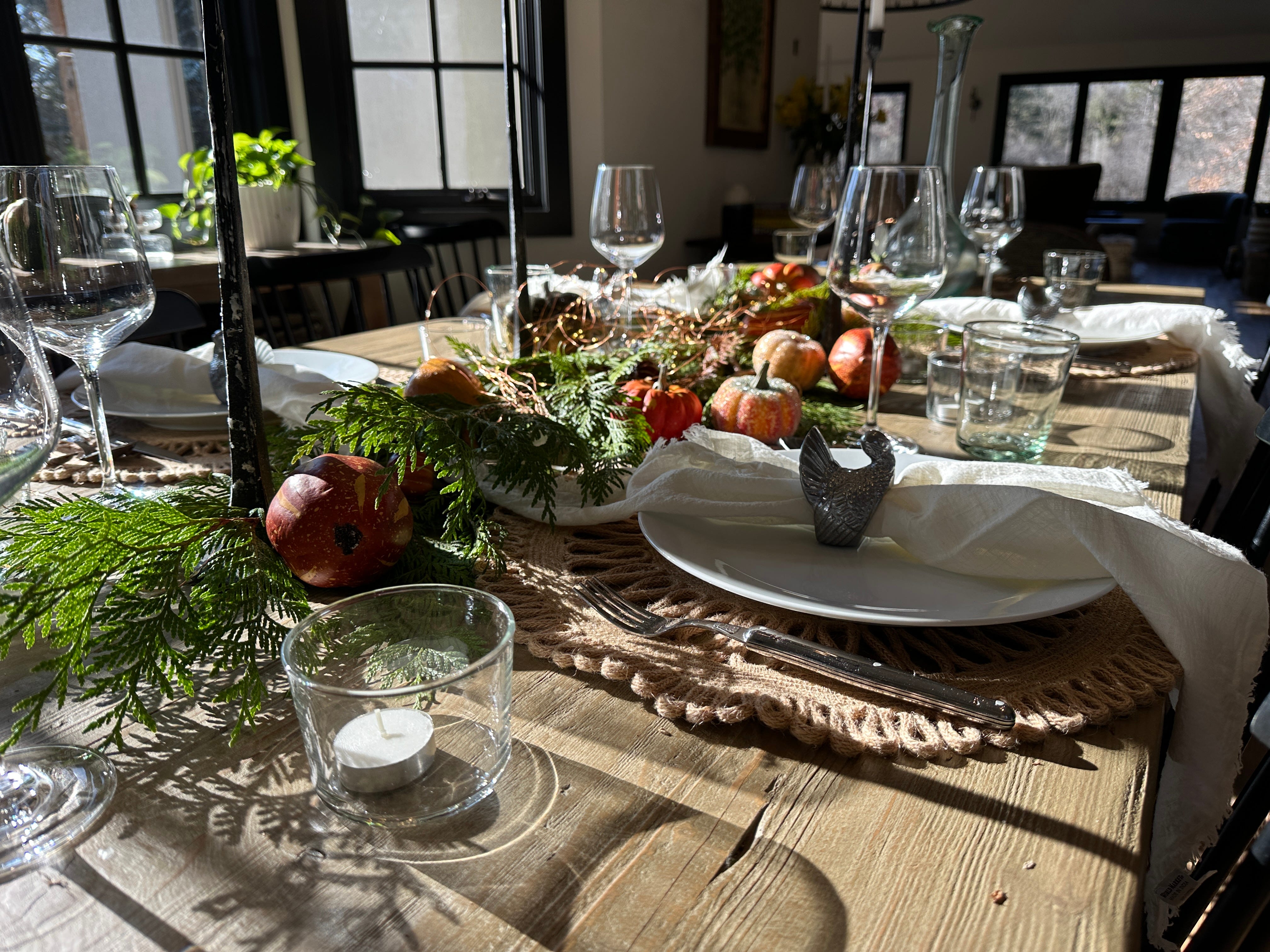
2. The “Neutral Anchor” Table Strategy
Instead of doing a complete 100% overhaul of your dining space between Thanksgiving and December, design a versatile base layer:
The Foundation: Use neutral table linens, warm wood charger boards, and glass votives that work for an autumn harvest feast and a Christmas dinner.
The Pivot: For Thanksgiving, your centerpiece can feature heirloom squashes, cabbages, and warm harvest tones. Once Thanksgiving wraps, swap those out for fresh pinecones, cedar boughs, and red berries. The underlying table infrastructure—dishes, glasses, linens, and lighting—stays set and ready.

3. Pre-Party the Prep Work: Don’t Decorate Alone
Why do we treat holiday decorating and heavy staging like a solitary chore? It takes hours of heavy lifting, untangling lights, and climbing ladders. This year, we’re changing the dynamic and inviting some friends over for a “Decorating Pre-Party.”
Having an extra set of hands turns an exhausting task into an event. Put on a great playlist, open a good bottle of wine, pull out a warm spread, and let the work become part of the celebration. What would take Steve and me days to finish gets done in a single afternoon—and we build a great memory in the process.

4. The Early Inventory Audit: Fixing Last Year’s Rush
There is nothing worse than standing on a ladder in late November only to realize three light strands are burnt out, or scrambling on Thanksgiving morning because your favorite gravy boat is missing.
Let’s be honest about why this happens: it’s the leftover result of last year’s January cleanup. When the holidays end, we just want our houses back, so we pack everything away in a total rush. Serving platters get shoved into random bags, twinkle lights get tossed into tote bins still tangled, and hosting pieces end up scattered across three different storage spots.
Doing an inventory audit in August is really about giving yourself a clean slate. We pull all the lighting out to test the strands and replace burnt-out bulbs while we have the quiet time. Then, we pull down every entertaining bin, count our serving platters, and repackage them neatly. Cleaning up last year’s scramble now gives you the gift of zero panic when Thanksgiving week arrives.
5. Less is More: Focus on Impact, Not Clutter
I’m learning that a beautiful holiday home doesn’t mean covering every flat surface until the house feels heavy and loud. Focus on a few high-impact focal points:
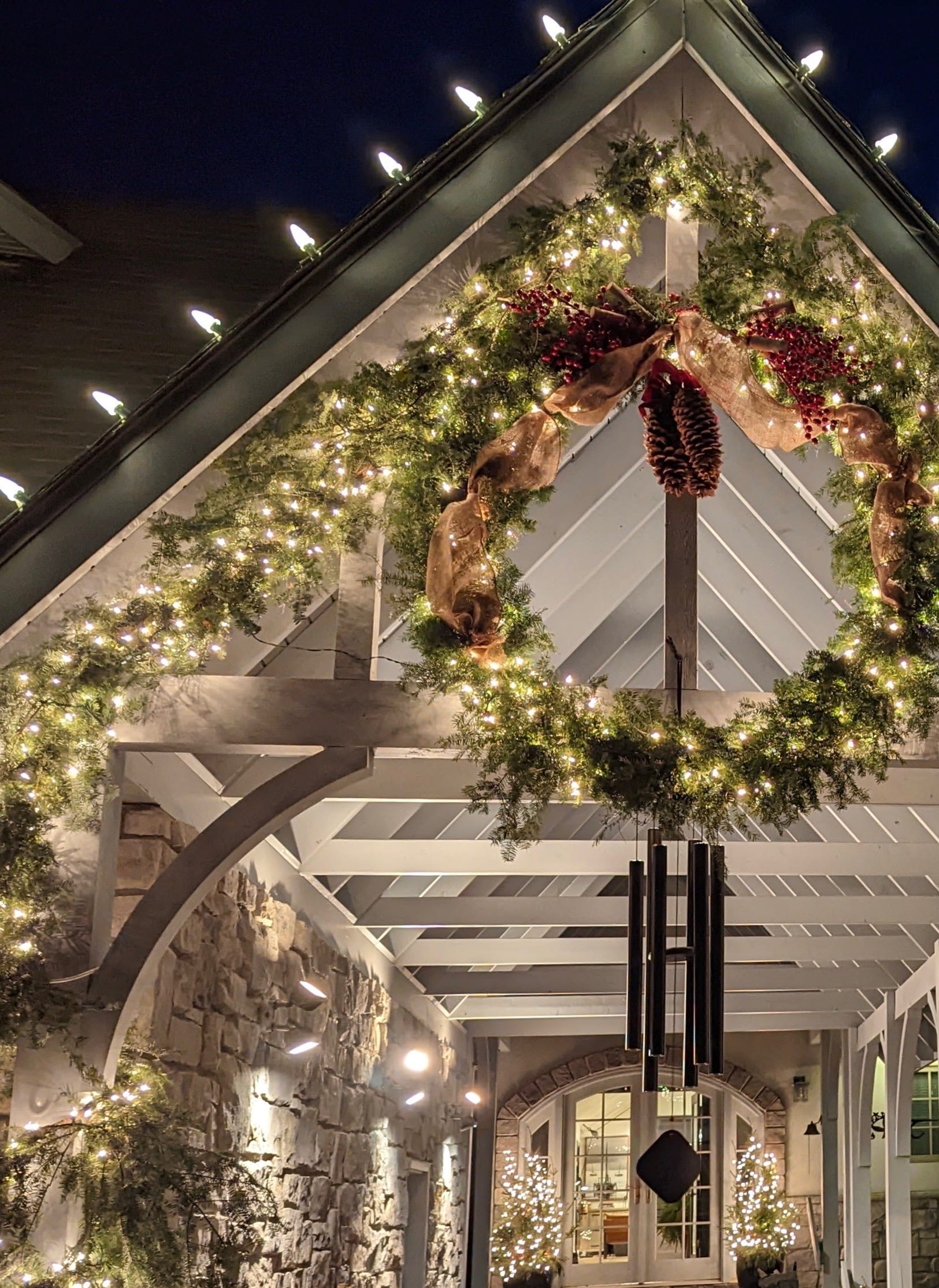
The Main Anchor: For Thanksgiving, it’s a gorgeous, warm table setting. For Christmas, it’s the tree and the fireplace wreath. Let one or two central elements hold the magic.
The Warmth Layer: Twinkle lights and simple evergreen accents throughout the main living areas carry the theme without creating clutter.
Smart Swaps for High-Maintenance Areas: I love fresh greens, but shedding over light fixtures and ceiling beams is out of control. This year, I’m investing in high-quality artificial greenery specifically for those high-up places—they can go up early, stay looking pristine, and require zero cleanup.
6. Plan for the January 1st Tear-Down: Save Future You!
A truly successful hosting strategy isn’t just about how you welcome the season—it’s about how you exit it. I love stepping into January 1st with a completely clear home and a quiet mind. When you simplify your physical setup on the front end, tearing it down stops feeling like a daunting chore and becomes a satisfying ritual of reset.
Think of your future self on January 1st as a friend you want to treat with care. Instead of rushing through the final pack-up in fatigue, view those closing moments as setting the stage for a calm, intentional New Year. When you store things with care at the end of the season, you aren’t just putting away decor—you are handing your future self peace of mind, lightness, and a fresh chapter ready to unfold.
Pro-Tip: Let Tech Take the Mental Weight
If you struggle with “future-casting” and detailed list-making like I do, use modern tools to hold the structure for you. I regularly use voice notes to process my thoughts out loud, then run those voice recordings through AI to convert my ideas into an organized, actionable to-do list for both holidays. It takes five minutes and keeps my brain free to focus on the creative details.
The Full-Season Hosting Checklist
If you want a friction-free fall and winter, here is a practical checklist of logical steps to check off long before Thanksgiving arrives:
August & September: The Foundation (Both Holidays)
[ ] Lock in Key Dates: Set your Thanksgiving, Christmas, and December party dates on the family calendar.
[ ] Establish a Hosting & Decor Budget: Set a single budget in August for both holidays and shop intentionally to it.
[ ] Draft Both Guest Lists: Finalize headcounts early so you know exactly how many place settings, chairs, and glasses you need for Thanksgiving and December.
[ ] Audit Seating & Furniture: Count your dining chairs, table leaves, and folding tables. Plan where extra guests will sit for both events.
[ ] Audit Outdoor Space: Check exterior lighting, pathway safety, and patio heaters before cold weather sets in.
October: The Infrastructure & Systems Check
[ ] Servingware & Dishware Audit: Pull down all serving platters, chafing dishes, bowls, wooden boards, and gravy boats. Wash, count, and organize them for Thanksgiving and Christmas.
[ ] Order Disposables & Linens: Purchase bamboo/paper goods, cocktail napkins, votive candles, and extra silverware to cover both events. Send tablecloths to be pressed.
[ ] Test All Lighting & Timers: Plug in every strand of holiday lights, extension cords, and timers. Replace burnt-out bulbs, fuses, and batteries in flameless candles now.
[ ] Measure Tree Spaces & Doorways: Measure display areas and entry doorways before cutting or purchasing your Christmas tree.
[ ] Deep Clean Guest Spaces: Clean out coat closets, ensure guest bathrooms are fully stocked, and clear out storage areas for guest coats/boots.
November (Pre-Thanksgiving): The Final Execution
[ ] Stage the Thanksgiving Table Early: Lay out your neutral tablecloths, runners, chargers, and place cards 2–3 days before Thanksgiving so the room is ready.
[ ] Confirm Rentals: If renting extra tables or glassware for either holiday, confirm delivery dates 3–4 weeks out.
[ ] Assign Decorating Tasks: Assign specific roles before your post-Thanksgiving decorating party so guests arrive knowing how they can help.
[ ] Pack an “Essentials First” Box: Pack a starter box with your must-have tools and core Christmas decor so you can begin the moment the tree is standing.
[ ] Stage the Entryway: Set out doormats, boot trays, and extra hangers so your front door is ready for Thanksgiving guests.
Pro-Active Habits for an Easy Jan 1st
[ ] Photograph Your Setups: Take photos of your Thanksgiving and Christmas room setups before tearing them down so you remember what worked next year.
[ ] Label Bins specifically: Label every storage bin by room and holiday rather than just “Christmas.”
[ ] Keep a Digital Note: Keep a running list on your phone of anything that broke, burned out, or ran low across both holidays.

Cari Ann Carter is the best-selling author of Are Your Roots Right? Rightsize Your Space. Reclaim Your Life. and a multi-faceted entrepreneur with a passion for intentional living, design, and home. She leads the Cari Ann Carter Group, bringing over 28 years of experience in real estate, design, build, and renovation, and is the creative voice behind DIY Designer Homestead. Through Fresh Roots Living, she shares practical ideas for cooking, gardening, entertaining, and creating a home that supports your next chapter.
Whether you’re reimagining your current home or searching for your next anchor space, Cari Ann and her nationwide network of trusted real estate and design professionals are here to help guide your journey—no matter where you live across the country.